
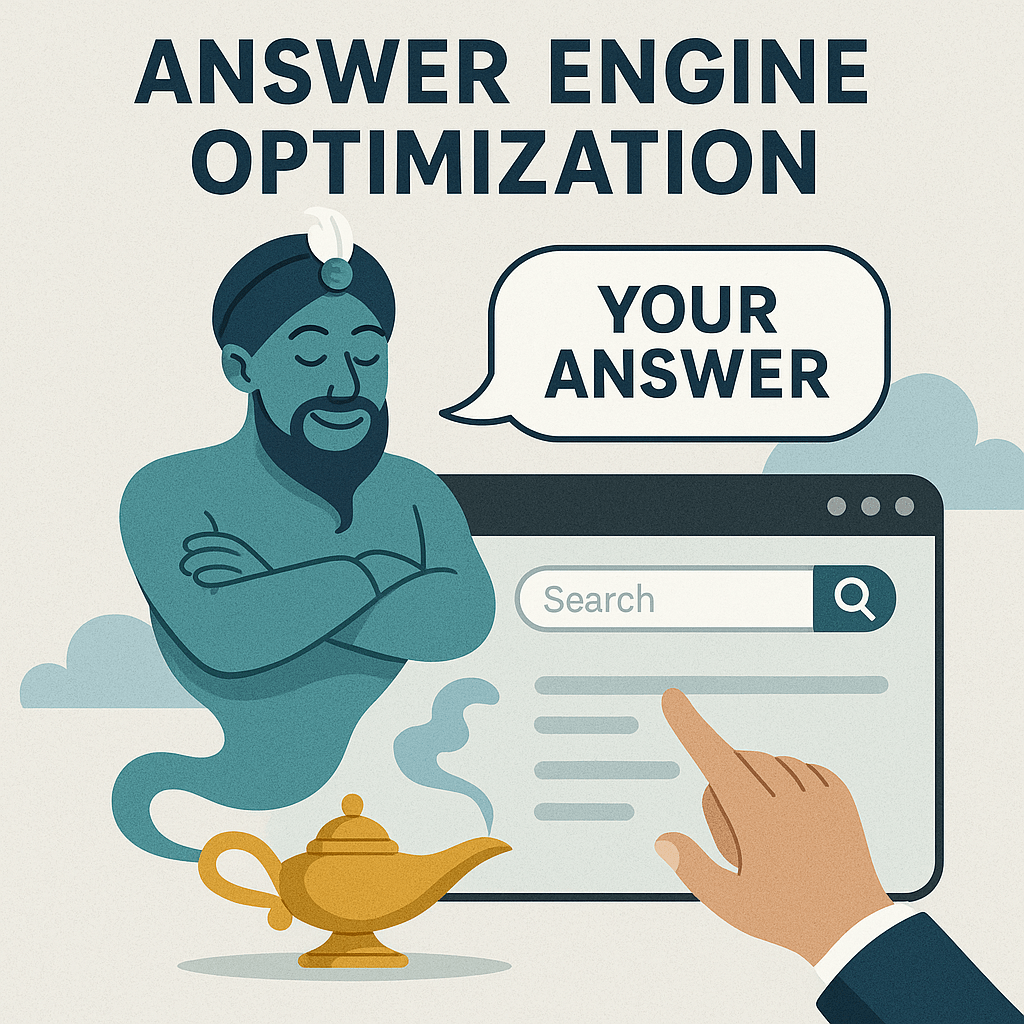
What Is AEO?
Answer Engine Optimization (AEO) helps your content get picked up by AI-powered platforms like Google’s AI Overviews, Bing Copilot, ChatGPT, Perplexity and voice assistants such as Siri and Alexa.
AEO isn’t about ranking in traditional search results. It’s about being the answer—the one a machine pulls and displays when a user asks a question.
Why AEO Matters
Search has changed. People now get answers without clicking links. Voice assistants read one response. Generative AI tools summarize top results.
If your content isn’t optimized for these systems, it gets skipped.
AEO gives your brand visibility in:
-
Featured snippets (position zero)
-
Voice assistant responses
-
AI-generated summaries
-
Chat interfaces like ChatGPT and Perplexity
AEO vs. SEO
| Feature | SEO | AEO |
|---|---|---|
| Audience | Human searchers | AI systems and voice assistants |
| Goal | Rank higher in SERPs | Be selected as a direct answer |
| Focus | Keywords and backlinks | Entities, structure and schema |
| Metrics | Clicks, sessions | Mentions, snippets, citations |
The Core Principles of AEO
1. Structure First
AEO starts with clear structure. Use:
-
Short paragraphs
-
Headers that ask/answer questions
-
Bulleted or numbered lists
-
Answer-first formatting (summary before detail)
2. Semantic HTML
Use correct tags like:
-
<header>,<article>,<section>,<footer> -
Logical heading order (H1 → H2 → H3)
-
Clean, valid code (run it through W3C Validator)
3. Schema Markup
Add JSON-LD schema like:
-
FAQPagefor Q&A -
HowTofor step-by-step guides -
Articlefor general content
Example:
{

"@context": "https://schema.org",

"@type": "FAQPage",

"mainEntity": [

{

"@type": "Question",

"name": "What is AEO?",

"acceptedAnswer": {

"@type": "Answer",

"text": "Answer Engine Optimization is the process of structuring content so AI systems can extract and serve it as direct answers."

}

}

]

}
4. Entity Optimization
Focus on concepts (not just keywords) that AI understands. Clarify:
-
Who or what your page is about
-
How it connects to other topics
-
What named entities (products, people, organizations) are mentioned
5. Voice Search Readiness
Write how people speak. Use:
-
Natural phrasing (“How do I…” instead of “Best method for…”)
-
29-word average for voice answers
-
Local details where relevant
How to Implement AEO
Step 1: Identify Real Questions
Use tools like:
-
AnswerThePublic
-
Google’s “People also ask”
-
Quora, Reddit, or Stack Overflow (for niche queries)
Focus on:
-
Informational queries (“What is X?”)
-
Problem-solving queries (“How do I fix Y?”)
-
Comparison queries (“X vs. Y?”)
Step 2: Create Machine-Readable Content
Make it scannable and structured:
For every page:
-
Start with a 40–50 word direct answer
-
Use headers that reflect search intent
-
Include relevant FAQs
-
Add semantic schema
Formatting tips:
-
Use bullet points and tables
-
Break content into short sections
-
Include internal links and breadcrumbs
Step 3: Optimize for Snippets and Voice
Snippet Formats That Win:
-
Definitions: 1–2 sentence answers
-
Lists: Ordered or bulleted
-
Tables: Clear comparisons
-
Steps: Numbered how-tos
Voice Optimization:
-
Use longer tail, question-based phrases
-
Avoid jargon
-
Aim for 29–40 word responses
Step 4: Track and Adjust
Use:
-
Google Search Console: Track snippet appearance and schema errors
-
Ahrefs / SEMrush: Monitor rankings and visibility
-
ChatGPT / Perplexity: Manually test how answers surface
Update content quarterly based on what’s working—or not.
AEO for Different Platforms
| Platform | What Works Best |
|---|---|
| Google AI | Structured data, freshness, FAQ schema |
| ChatGPT | Clear Q&A, citations, semantic clarity |
| Perplexity | Direct answers with sources, crisp HTML |
| Bing Copilot | Schema-rich content from indexed pages |
| Voice Assistants | Natural phrasing, concise answers |
AEO Audit Checklist
✅ Content
-
Lead with the answer
-
Headers reflect real questions
-
Lists and tables used for structure
-
FAQ section added
-
Short paragraphs and simple language
✅ Technical
-
Clean HTML with proper tags
-
JSON-LD schema in place
-
Metadata filled in (
datePublished,author) -
Mobile-optimized and loads in <3s
-
HTTPS secured
✅ Testing
-
Rich Results Test passed
-
Voice assistant returns your content
-
ChatGPT/Perplexity citation appears
-
Structured data error-free
Key Tools for AEO
| Task | Tool |
|---|---|
| Schema generation | Google Structured Data Markup Helper |
| Schema validation | Google Rich Results Test, Schema.org |
| Page structure crawling | Screaming Frog, Sitebulb |
| Voice testing | Siri, Alexa, Google Assistant |
| AI output testing | ChatGPT, Perplexity, Bing Copilot |
Final Thoughts: Build for the Future of Search
AEO is not a tactic. It’s a system. If your content isn’t readable by AI, it’s not discoverable. The winners in search will be those who:
-
Structure for machines
-
Write for humans
-
Update regularly
-
Test across platforms
AI is now the front door to your content. If you want to be the answer, you have to speak its language.